
How User-Generated Content (UGC) Will Transform Your Marketing Strategy in 2025
17 July 2025
Data-driven content: personalize your communication to perform internationally
22 August 2025
Definition and fundamentals
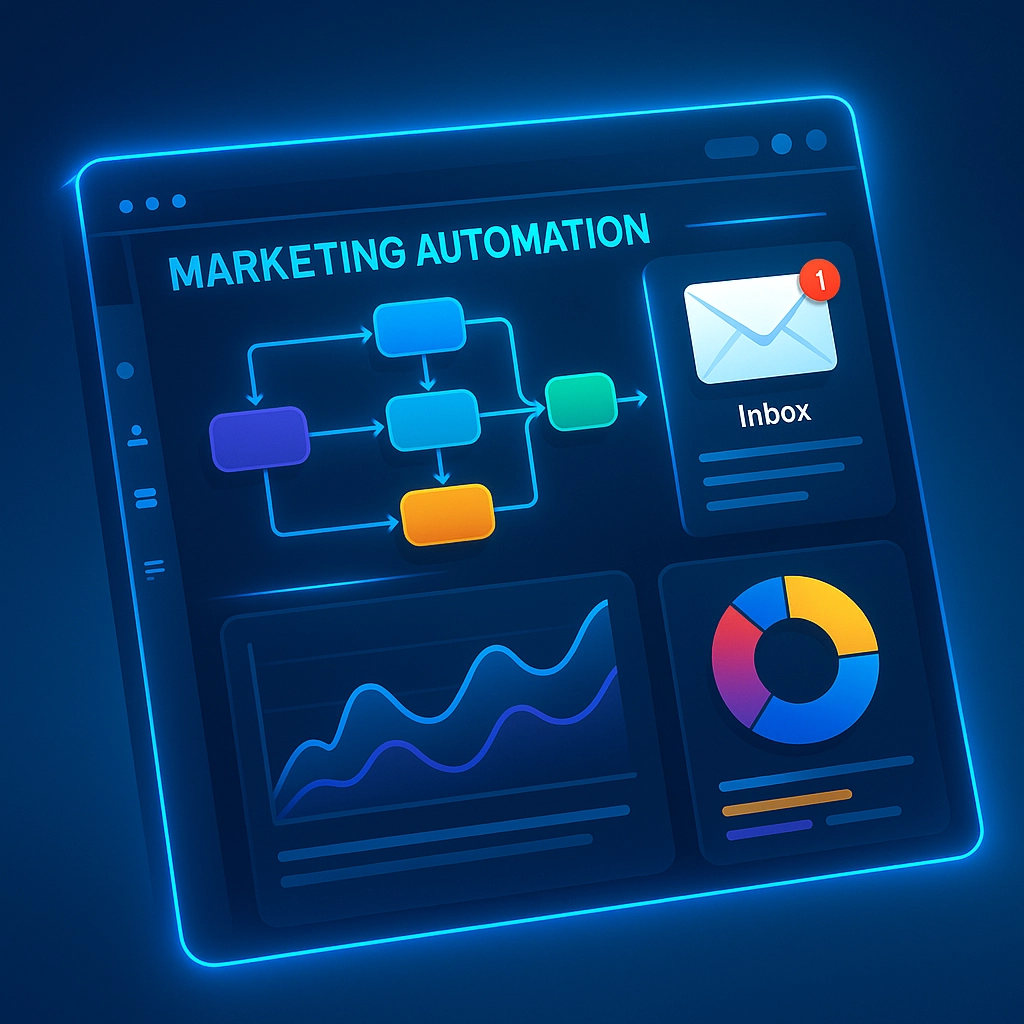
Marketing automation refers to the use of specific technologies and software to automatically orchestrate repetitive tasks, provide in-depth analysis of campaign performance and ensure large-scale personalization. By centralizing all operations – e-mail campaigns, lead management, audience segmentation, conversion tracking – these solutions enable marketing teams to refocus on strategy, creativity and analysis.
The aim is to deliver the right message, at the right time, on the most relevant channel, and to precisely measure the impact of each action. By automating what can be automated, companies gain in time, rigor and operational efficiency.
Why automate your digital marketing?
Automation has emerged as a concrete response to the new challenges of digital marketing: multiplication of contact points, explosion of data, complexity of customer paths. For an offshore communications agency or an ESN with an international focus, the challenge is to maintain a consistent digital presence, while generating a maximum number of leads and controlling costs.
Strategic benefits of automation :
- Time savings: manual, repetitive activities are delegated to the machine, freeing up time for high value-added tasks.
- Consistency: The marketing calendar, messages and campaigns are managed according to a global, controlled logic.
- Reactivity: Automated scenarios can be used to instantly follow up on a contact, adapt messages according to behavior, or trigger personalized communication following a specific action.
- Advanced analysis: Dashboards centralize performance indicators, providing a strategic and operational view.
The essential marketing automation tools
Generalist platforms
ActiveTrail: Multi-channel solution in French, adapted to SMEs and ETIs. ActiveTrail automates email campaigns, SMS, push notifications and interactions on WhatsApp or social networks. Its dynamic segmentation and behavioral triggers enable advanced automation scenarios, such as abandoned cart relaunches, lead scoring and personalized nurturing.
ActiveCampaign: This solution combines CRM with marketing automation and email management. It excels at creating complex customer journeys, automating follow-ups based on purchasing behavior, and managing personalized newsletters.
Specialized solutions by sector
Omnisend: Dedicated to e-commerce, Omnisend integrates easily with solutions such as Shopify, BigCommerce or Wix. It enables targeted automatic campaigns (pop-ups, shopping cart relaunches, cross-selling) and advanced content personalization, to increase sales per customer.
UiPath: Robotic Process Automation (RPA) tool for automating complex business processes, ideal for high-volume or large enterprises: automatic data extraction, CRM integration, report generation, etc.
monday.com: More focused on project management and collaboration, monday.com also offers automation features to synchronize marketing tasks, CRM and workflows.

Social networking tools
Automation finds a particularly relevant field of application on social networks. Platforms such as Buffer, Hootsuite or Agorapulse enable you to plan and schedule content publication, centralize moderation, track performance statistics and automatically trigger certain responses based on keywords or typical behaviors.
To find out more about managing a B2B Facebook page, read our dedicated article: B2B Facebook page management: best practices.
Methods and best practices for successful automation
1. Define your objectives and KPIs
Before setting up any automation program, it’s essential to define its precise objectives: lead generation, increased conversion rate, loyalty, development of average shopping basket, etc. Define clear, measurable tracking indicators for each campaign.
2. Mapping the customer journey
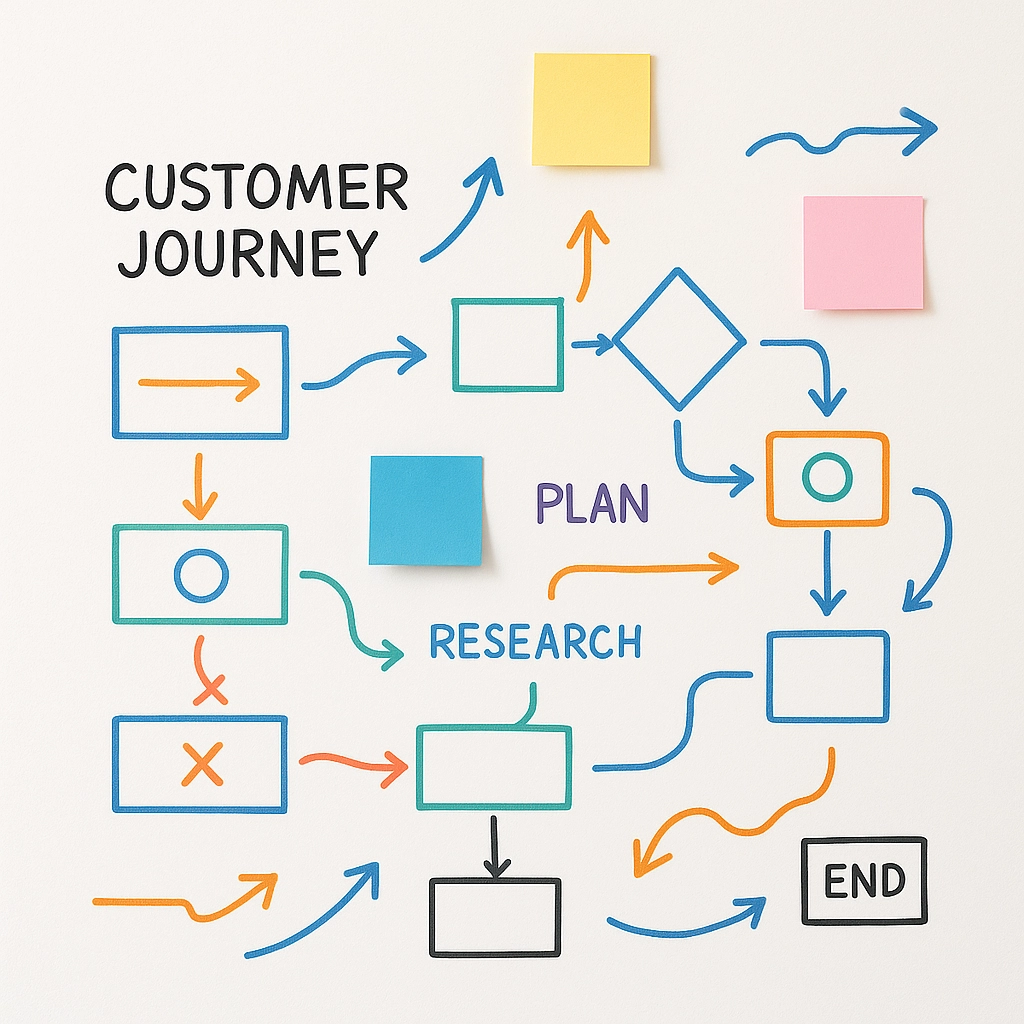
The most effective automation is based on a perfect understanding of the customer journey: identification of key contact points, decisive moments and personalization possibilities. This makes it possible to create adapted and relevant scenarios, from first contact to conversion, and then to loyalty.
3. Structuring the database and segmenting audiences
The value of automation depends on the quality of the data collected: contacts, history, behavior, interests, geolocation… Intelligently segment your audiences to offer personalized content and contextual messages.

4. Design relevant automated scenarios
Work on automated sequences adapted to each segment: shopping cart relaunches, series of welcome emails, nurturing campaigns or satisfaction surveys. Adapt tone, timing and channel to maximize effectiveness.
5. Continuous testing, analysis and optimization
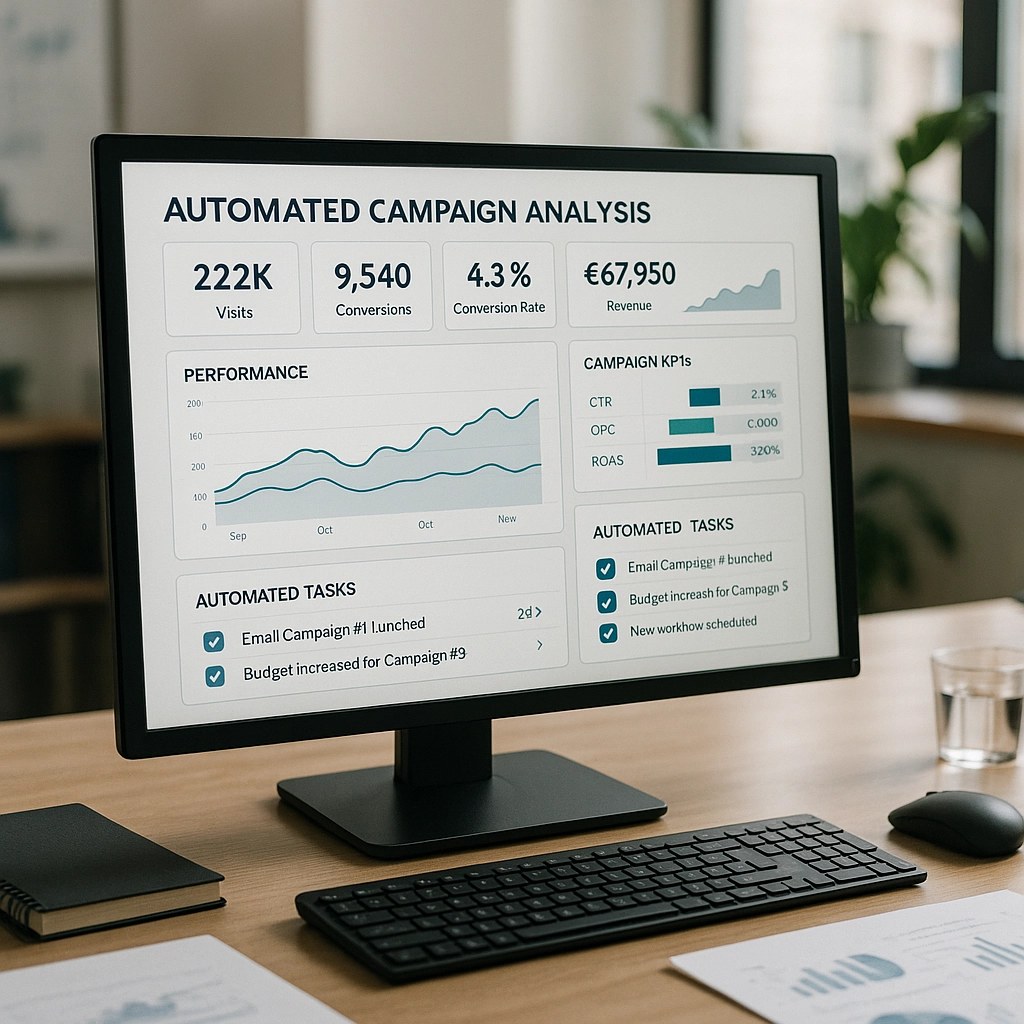
Evaluate the performance of each scenario, identify friction points and fine-tune your campaigns. Automation is not a fixed process, but an evolving lever that can be continuously fine-tuned thanks to field feedback and KPI analysis. Tools like Google Analytics and the integrated dashboards of automation solutions are invaluable for real-time control.
6. Ensuring RGPD compliance
Automation must comply with current regulations on the management of personal data. Respect consent, opt-in, preference management and data deletion if necessary.
Automation and performance: case studies
A wide range of business sectors now benefit from these technologies. Here are just a few examples:
- E-commerce: Automatic follow-up emails for abandoned carts; personalized product recommendations based on purchase history.
- B2B/Services: lead nurturing with email sequences, automated appointment scheduling, automated scoring to prioritize sales actions.
- Corporate communication: Planning of corporate publications on all social networks from a single dashboard; automated e-reputation monitoring.
To explore the different campaign types and their benefits, consult our guideOptimize your results with Google AdWords.
Criteria for choosing a marketing automation tool
The choice of platform depends on a number of parameters:
- Company size
- Degree of sophistication of needs
- Integration with existing tools
- Available budget
- Ease of use and customer support (in French if required)
- Customization and reporting options
Don’t hesitate to test the trial versions and read the feedback. Good implementation and training support is often a real asset to the project’s success.
Future challenges and developments in marketing automation
The integration of artificial intelligence, the rise of no-code and hyper-personalization are the next big trends in marketing automation. Platforms are becoming increasingly accessible, with intuitive interfaces and predictive capabilities that enable us to offer the right content at the right time, on the right channel, with enhanced efficiency.
To find out how AI is transforming website creation, we invite you to read: Create your website using artificial intelligence: a complete guide.
Find out how DS Overseas supports its customers in implementing innovative, personalized and effective automated marketing strategies: Find out more about our expertise.