
Meta boosts designer collaborations on Instagram: what brands need to know in 2026
20 January 2026
User Personas: The Key to Creating Campaigns That Truly Resonate with Your Customers
18 March 2026
In the digital age, today’s consumers no longer follow a linear path. They discover a product on Instagram, compare reviews on Google, ask a question via a chatbot, and complete their purchase on an e-commerce site or directly in-store. For international companies, as well as those seeking to establish a lasting presence in the Tunisian market, this multitude of touchpoints represents both a monumental challenge and a golden opportunity.
In the face of this fragmented behavior, traditional marketing approaches are no longer sufficient. That’s where omnichannel marketing comes into play. Inspired by international best practices and tailored to the realities of emerging and global markets, this strategy aims to unify all communication and sales channels to deliver a seamless, personalized, and frictionless experience. At DS Overseas, a leading digital marketing and communications agency, we support advertisers through this transformation to maximize customer engagement and drive growth.
Key Takeaways
- Unified Experience: Omnichannel marketing synchronizes all touchpoints (website, social media, email, apps, and physical retail locations) to create a single, unified brand voice.
- Improved Performance: According to several leading e-commerce studies, omnichannel campaigns generate significantly higher purchase and conversion rates than traditional multichannel campaigns.
- Key difference: Unlike multichannel, which combines separate, isolated channels, omnichannel connects data and customer journeys so that customers can pick up exactly where they left off, regardless of the device they’re using.
- International competitive advantage: For companies operating in Tunisia, Europe, Africa, and the Middle East, such a strategy reduces customer churn and builds loyalty among a demanding customer base.
- Tailored Expertise: Creating this synergy requires data centralization, precise mapping of the customer journey, and comprehensive strategic support, such as that offered by DS Overseas.
What Is Omnichannel Marketing?
Omnichannel marketing is a strategic approach that involves integrating all of a company’s communication, marketing, and sales channels to provide a seamless and interconnected shopping experience.
Contrary to popular belief, it’s not just about being everywhere. It’s about ensuring that all your channels communicate with each other in real time. If a potential customer views a service offering on your website, abandons their shopping cart, or leaves a lead-generation page, your digital ecosystem must be able to deliver relevant information through a targeted social media ad campaign or a personalized follow-up email.

For international companies seeking to establish a presence in Tunisia or to expand from Tunisia into Africa and Europe, this flexibility ensures impeccable institutional credibility.
Why Is Omnichannel Marketing Crucial for International Companies?
In a globalized world, your potential customers are constantly navigating different technological and cultural environments. A B2B or B2C buyer expects your brand to recognize them, understand their needs, and provide an instant response—whether they’re in Tunis, Paris, London, or Dubai.
Adopting an omnichannel strategy makes it possible to:
- Meeting the Expectations of Digital Shoppers: The modern shopping journey is hybrid. Ignoring a channel means ceding market share to your competitors.
- Harmonizing Corporate Communications: For multinational corporations and export-oriented companies, maintaining a consistent brand image across borders is essential to reassuring partners and investors.
- Optimize Advertising Spend: By integrating your campaign management and paid advertising data, you can avoid duplication and reach the right audiences at the exact moment they show an intent to purchase.
Key Difference: Multichannel vs. Omnichannel
These two concepts are often confused. Let’s clarify them so we can fully understand what’s at stake:
- Multichannel: The company uses multiple channels (a website, a Facebook page, an Instagram account, a physical store), but these channels operate in silos. They do not necessarily share the same databases or instant messages. A customer might contact customer support on social media and then have to repeat their entire history in-store.
- Omnichannel: All channels are interconnected and revolve around a single customer profile. Web browsing data, purchase history, social media interactions, and support tickets are centralized. Customers enjoy seamless continuity, regardless of the channel they choose.
The Tangible Benefits for Your Brand
Investing in an omnichannel architecture profoundly transforms business performance and brand image:
- A Seamless Customer Experience: No more starting from scratch every time you switch devices or touchpoints. Your shopping cart, preferences, and history follow you every step of the way.
- Enhanced Brand Recognition and Trust: Visual and tonal consistency across all media conveys a professional and reassuring image, which is particularly valued in demanding sectors (finance, aviation, manufacturing, and new technologies).
- Advanced Personalization: Through detailed analysis of behavioral data, your advertising messages and promotional offers are tailored in real time to each prospect’s interests.
- Greater Customer Loyalty and Higher ROI: By simplifying repeat purchases and offering responsive customer service (particularly through structured community management), customer retention rates soar, directly increasing the overall profitability of your marketing efforts.

How to Implement an Effective Omnichannel Strategy?
The transition to omnichannel retailing cannot be improvised. It is based on a rigorous methodology consisting of five key steps:
1. Centralize and Analyze Customer Data
To ensure your channels communicate with one another, you need to break down organizational silos. Integrating a high-performance CRM and robust analytics tools allows you to consolidate data from your website, email campaigns, social media, and physical retail locations into a single central hub.
2. Map the Customer Journey
Carefully identify each stage your target audience goes through, from initial discovery (via organic SEO or targeted ads) to conversion and customer retention. Understand where friction points occur and which channels most influence the final decision based on the targeted geographic regions (Tunisia, the Maghreb, Europe, and Sub-Saharan Africa).
3. Integrate Digital Channels and Tools
Make sure your technology platforms work in synergy. Your website (custom-designed to be fully responsive), your mobile apps, your social media profiles, and your lead generation tools must exchange information in real time. This is where the support of an agency specializing in web design and digital solutions makes all the difference.
4. Establish Strict Brand Guidelines
Consistency is the cornerstone of omnichannel strategy. Develop clear editorial and visual guidelines that all your teams (marketing, sales, customer service, and community managers) must strictly adhere to. The tone, visuals, and brand promises must be identical in Paris as well as in Tunis.
5. Continuously Test, Measure, and Optimize
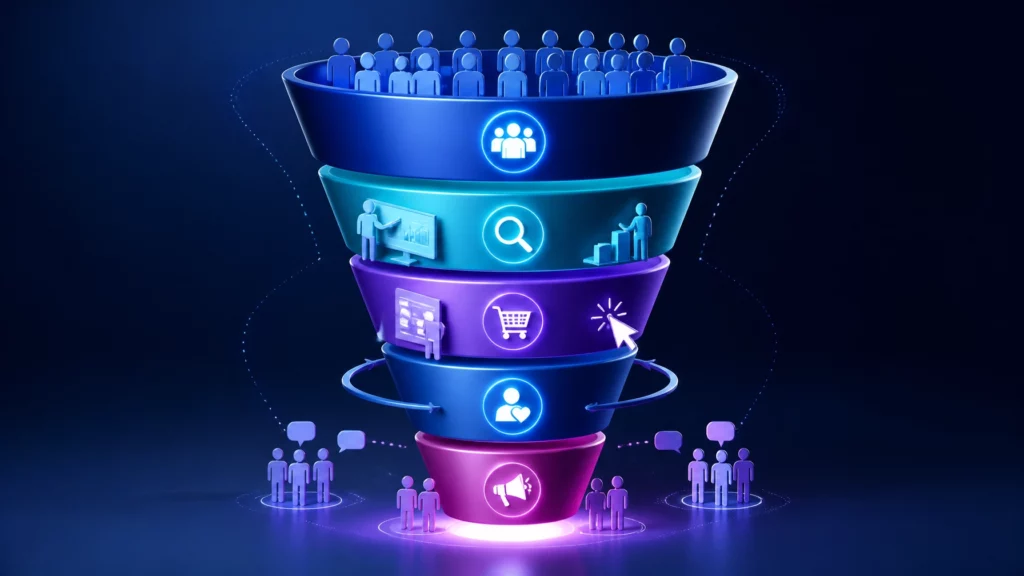
Set up dynamic dashboards to track key performance indicators (KPIs) at each stage of the conversion funnel: organic traffic, social media engagement rates, cost per acquisition (CPA), and customer lifetime value (LTV). Adjust your advertising campaigns and community management efforts based on the measured results.
Inspiring Examples Tailored to the International Context
From global giants to fast-growing companies, omnichannel is the secret to brands that deliver sustained success:
- In the retail and beauty sectors (following the practices of major corporations): Customers can test products online, check availability at the nearest store via a mobile app, and pick up their order in-store in just a few minutes.
- In the B2B and industrial sectors (oil, gas, aerospace, IT): A prospect downloads a technical white paper from an SEO-optimized blog post, receives a series of automated emails, is retargeted by a professional ad campaign on LinkedIn, and is then contacted by a sales representative who already has access to the company’s entire interaction history. This is the essence of modern B2B lead generation.

The Key Role of DS Overseas in Your Omnichannel Strategy
Implementing a successful omnichannel strategy requires a 360-degree perspective and cutting-edge technical expertise. Whether you’re looking to strengthen your digital presence in Tunisia or support your international expansion, DS Overseas offers comprehensive support:
- Digital Marketing Strategy Consulting: Development of customized roadmaps tailored to your industry and target markets.
- SEO & Social Media: Optimizing your organic visibility on search engines and expertly managing your online communities.
- Targeted Advertising & Social Ads: Managing multichannel campaigns with a high return on investment (ROI).
- Content Creation and Video Production: Strengthen your corporate communications and brand image through impactful visual media.
Conclusion
Omnichannel marketing is no longer just an option reserved for multinational corporations—it’s the standard demanded by hyper-connected and fickle consumers. By unifying your data, messaging, and touchpoints, you remove barriers to purchase and turn every interaction into an opportunity for growth.
Are you looking to create a flawless customer experience and propel your brand to new heights—whether internationally or in Tunisia? Contact the DS Overseas team today, and let’s build your digital success together.